
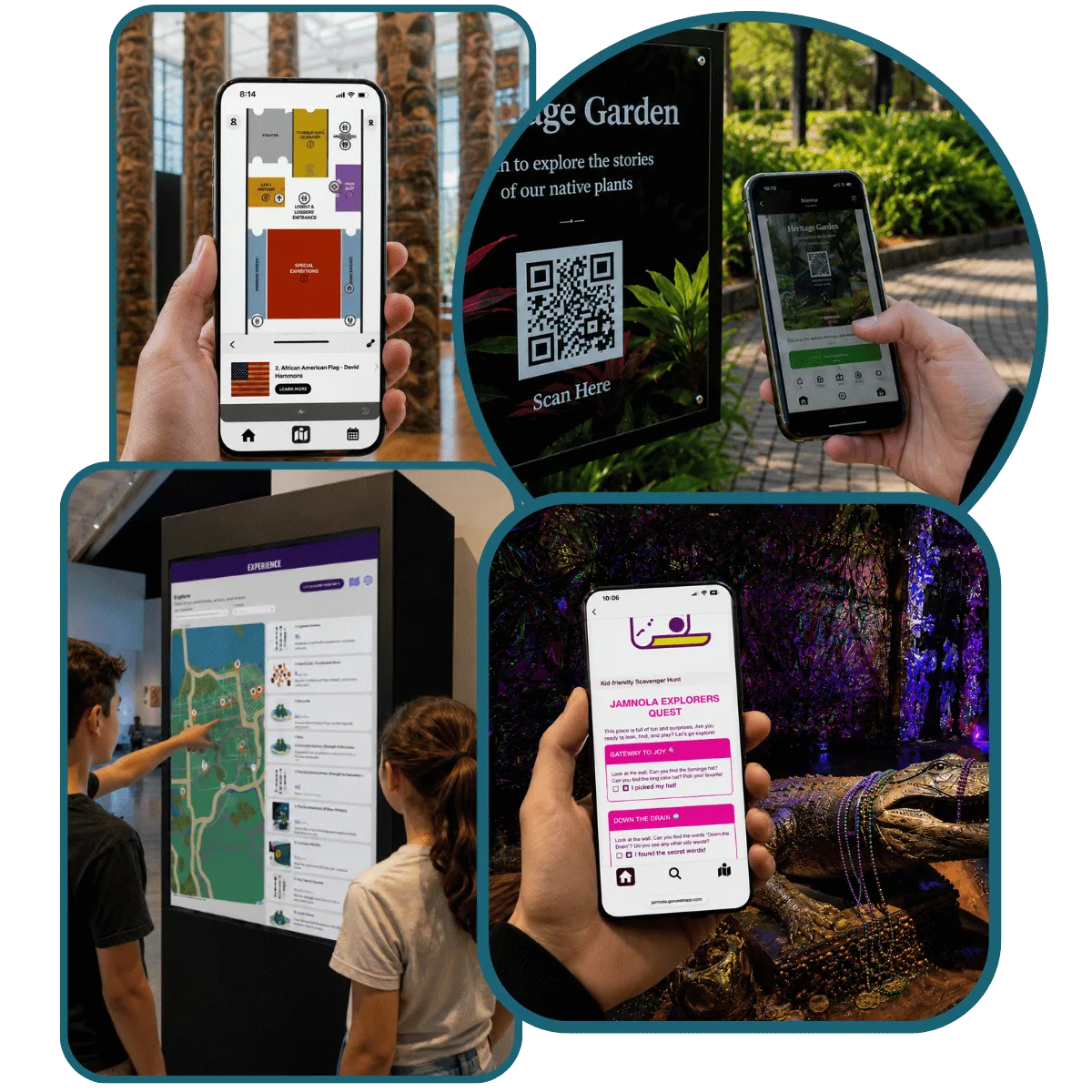
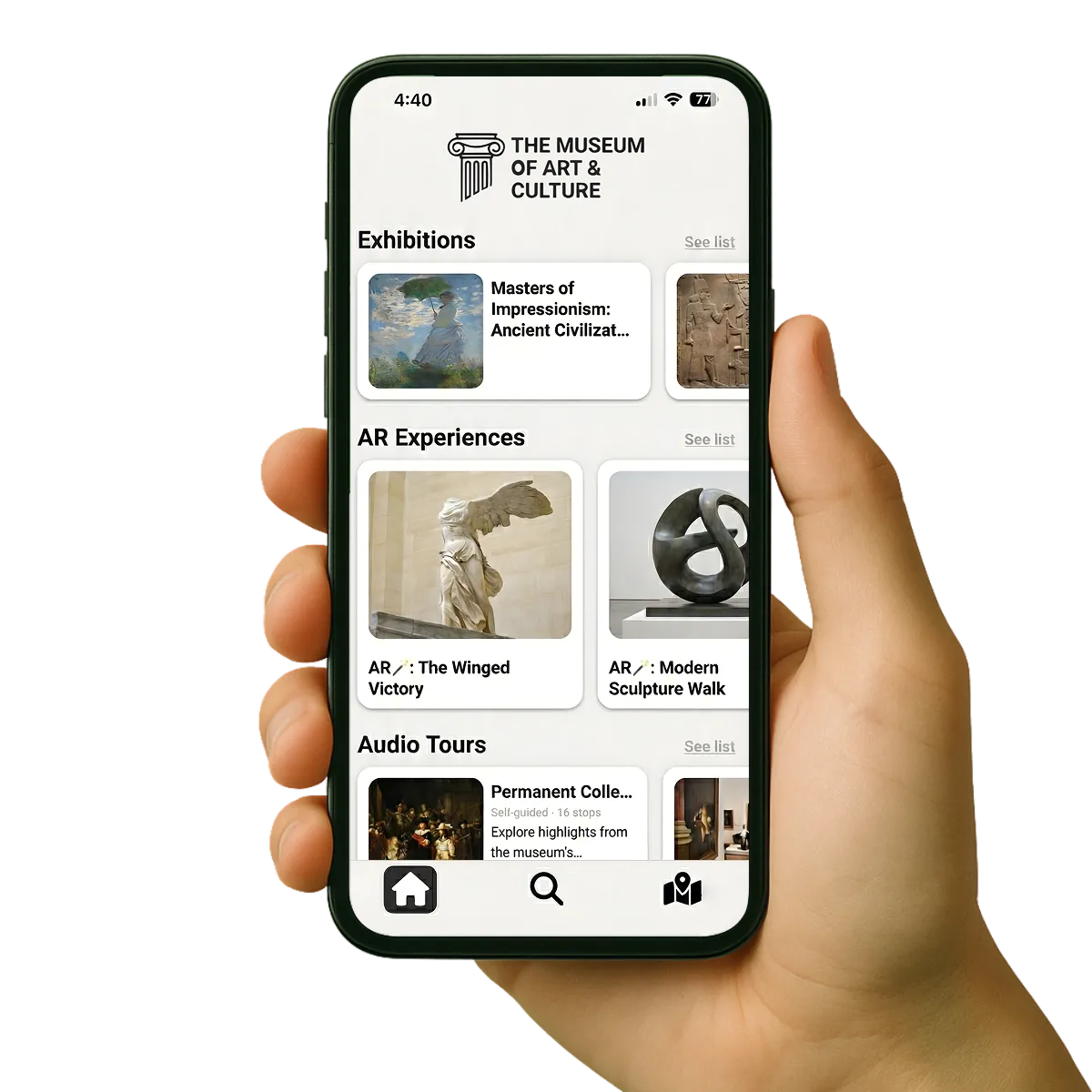
Gallery layouts change. Exhibitions rotate. Visitors arrive with wildly different levels of background knowledge, and most of them are holding a phone.
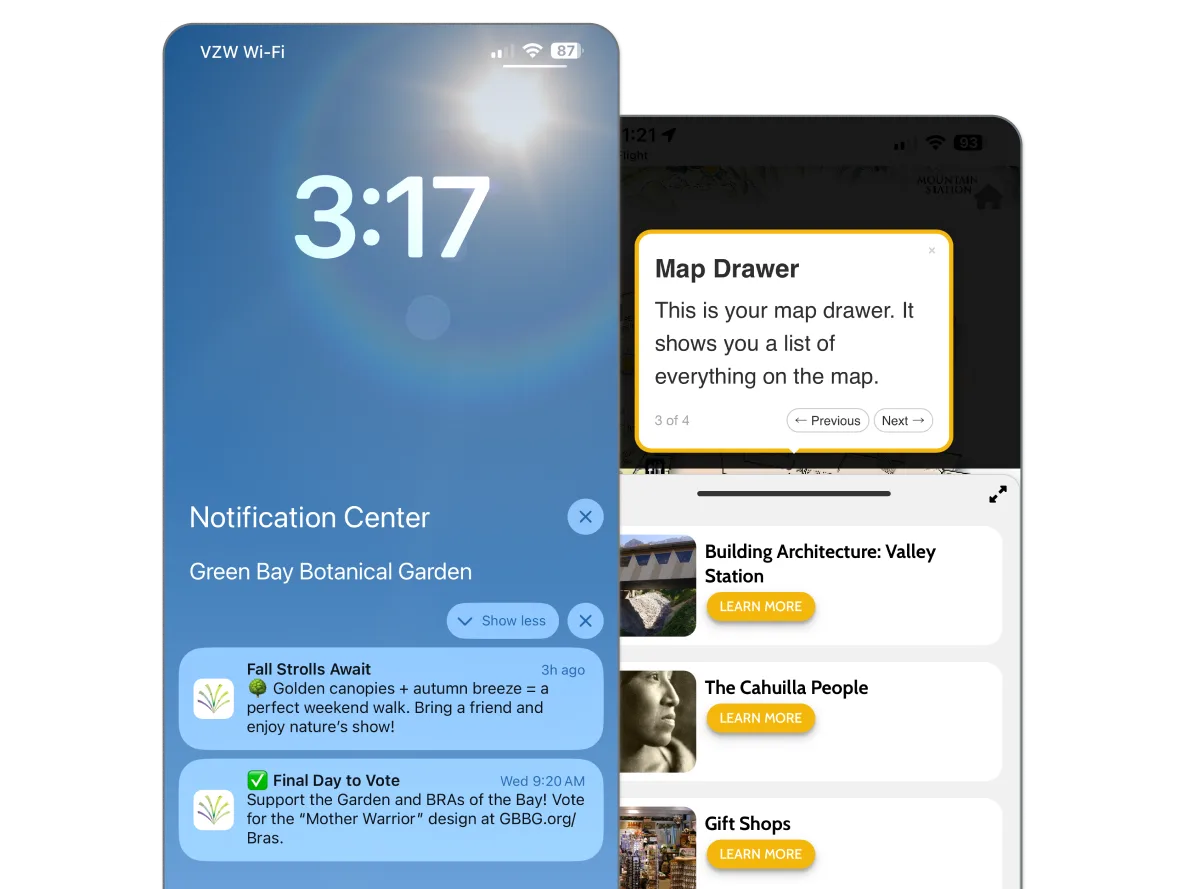
Guru gives museums a branded app that adapts as the building does. Curators publish new content without waiting on a developer, and visitors get depth when they want it and stay out of the weeds when they do not.
Your exhibits move, sleep, hide, and occasionally refuse to appear. Static signage cannot keep up, and neither can a printed map.
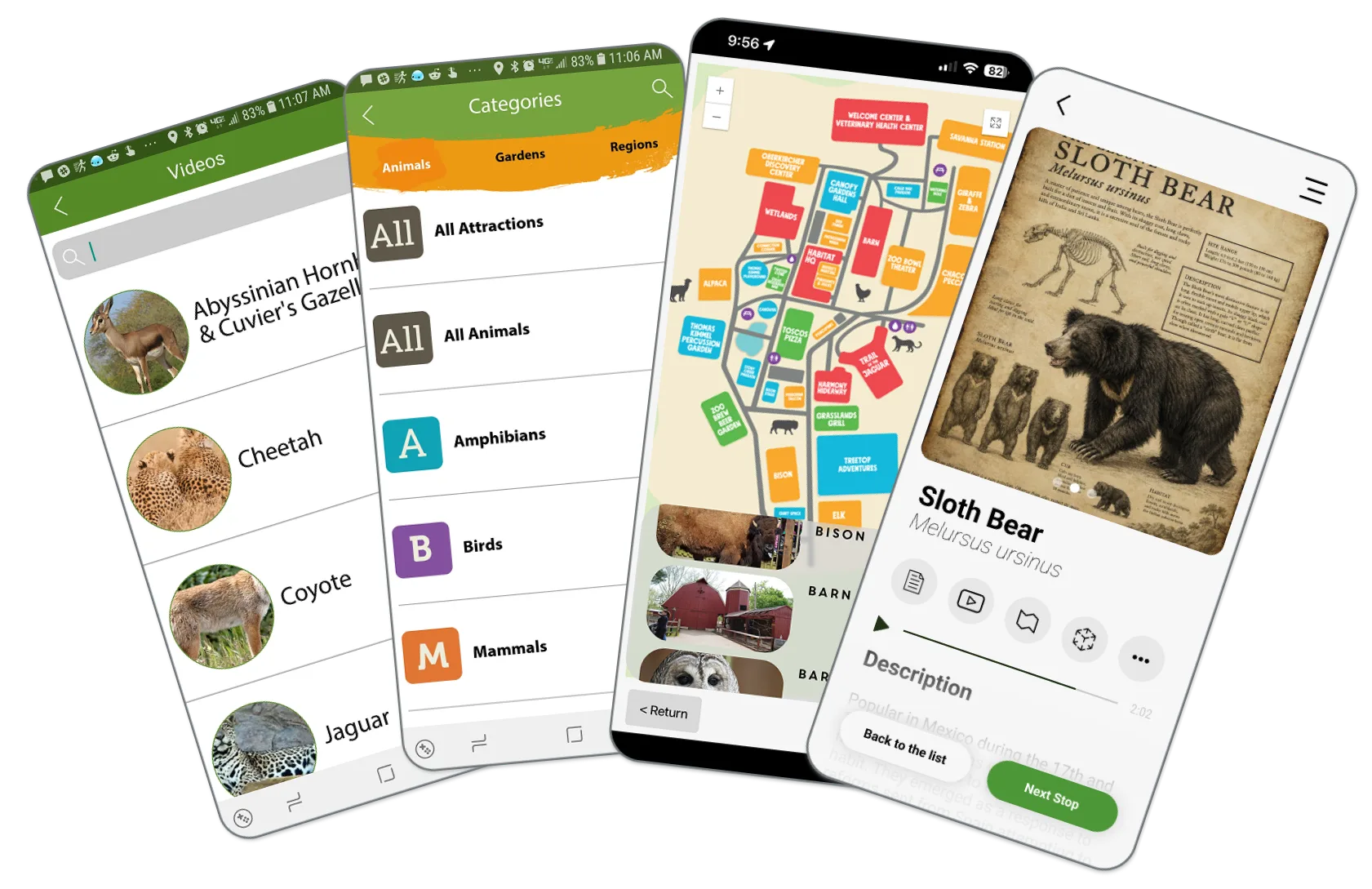
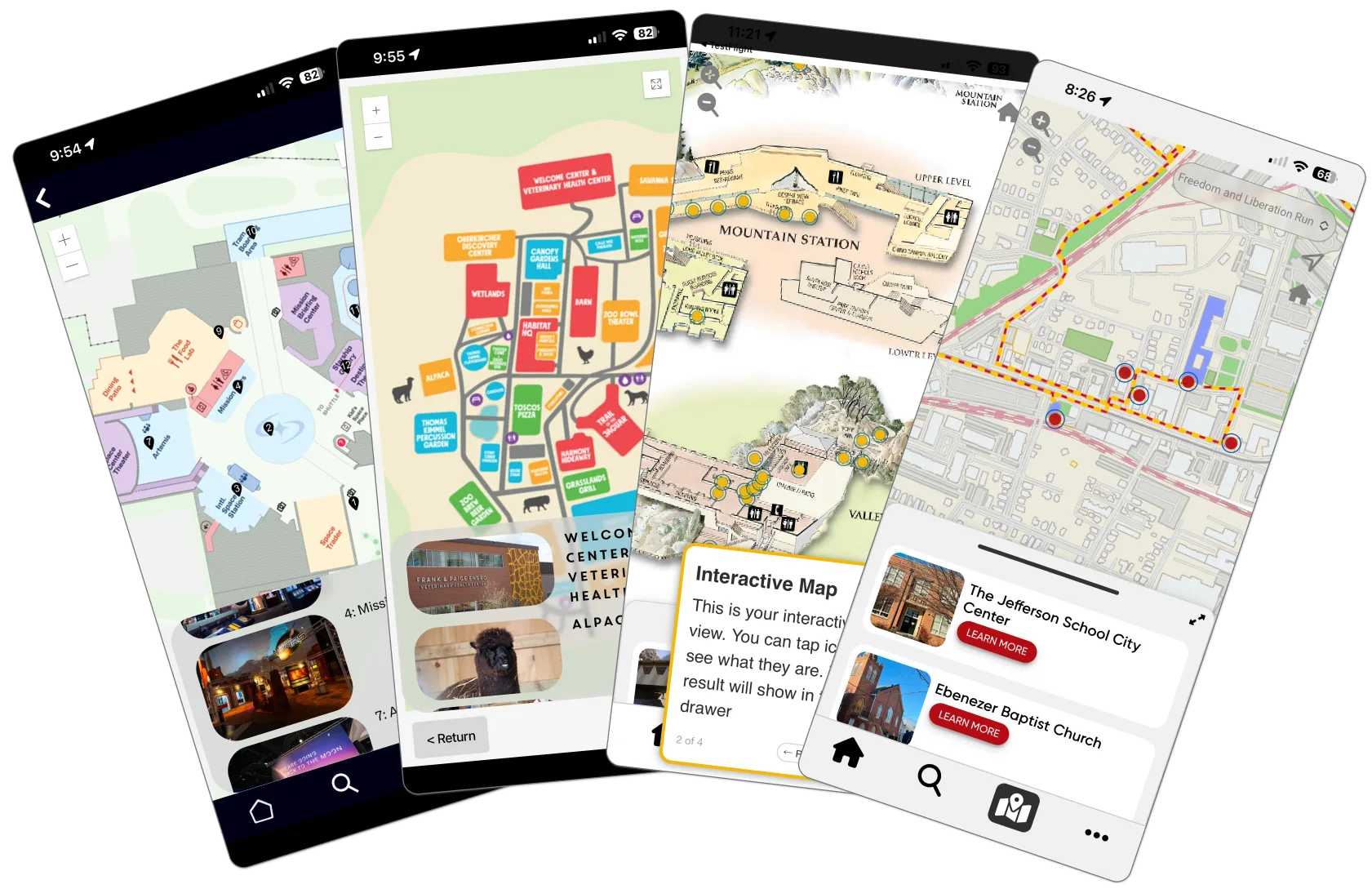
Guru handles outdoor scale and unpredictability: large grounds, feeding schedules that shift, and animals that are the reason people came. Staff update the day's programming from a phone, and visitors see it immediately.
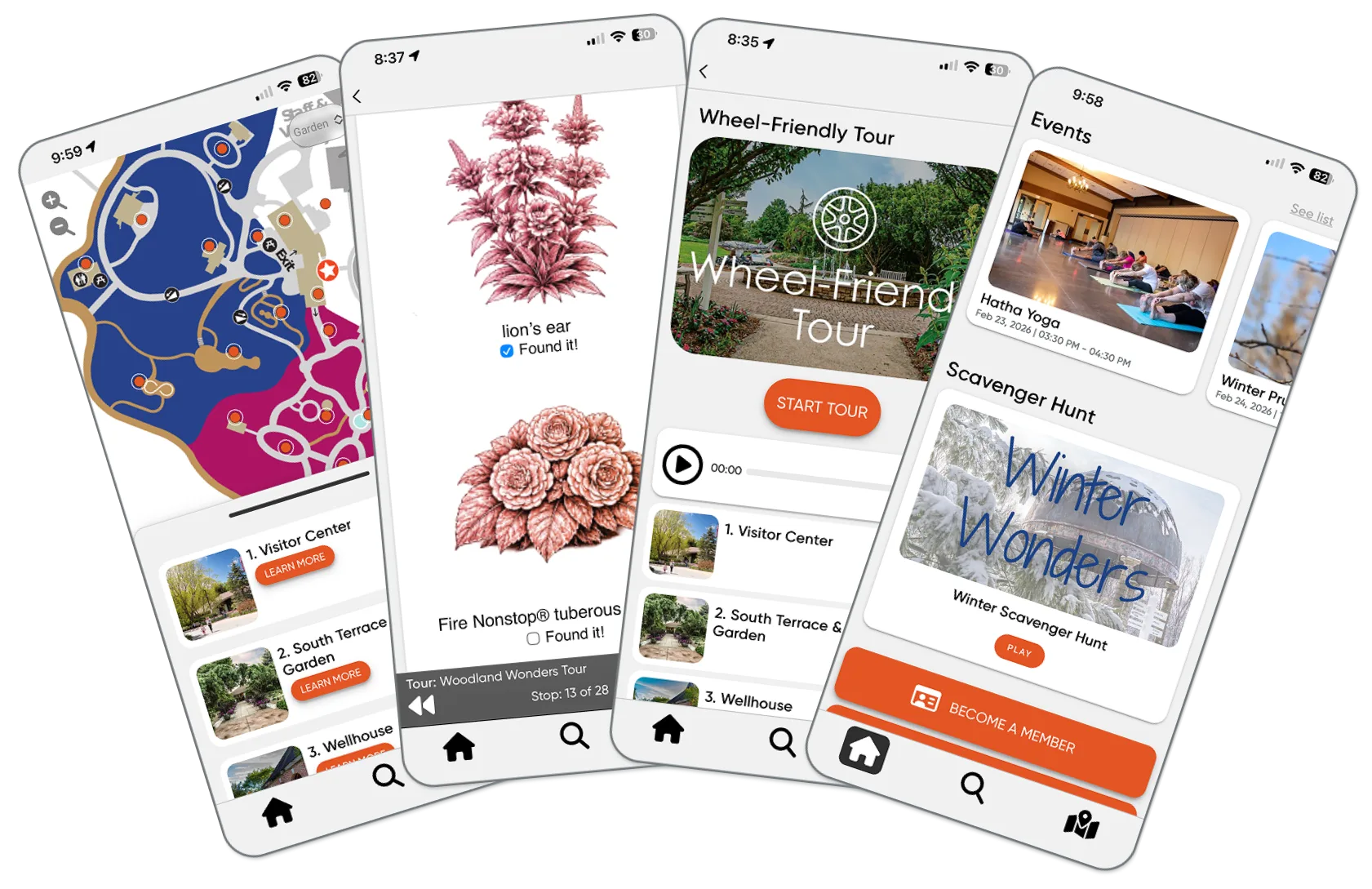
A garden is a different collection every month. The thing that was worth walking to in April is not the thing worth walking to in September.
Guru supports seasonal trails that change with what is actually in bloom, plus plant-level content for the visitors who want the Latin name and the provenance.
Wide sites, patchy signal, and stories that only make sense in a particular spot.
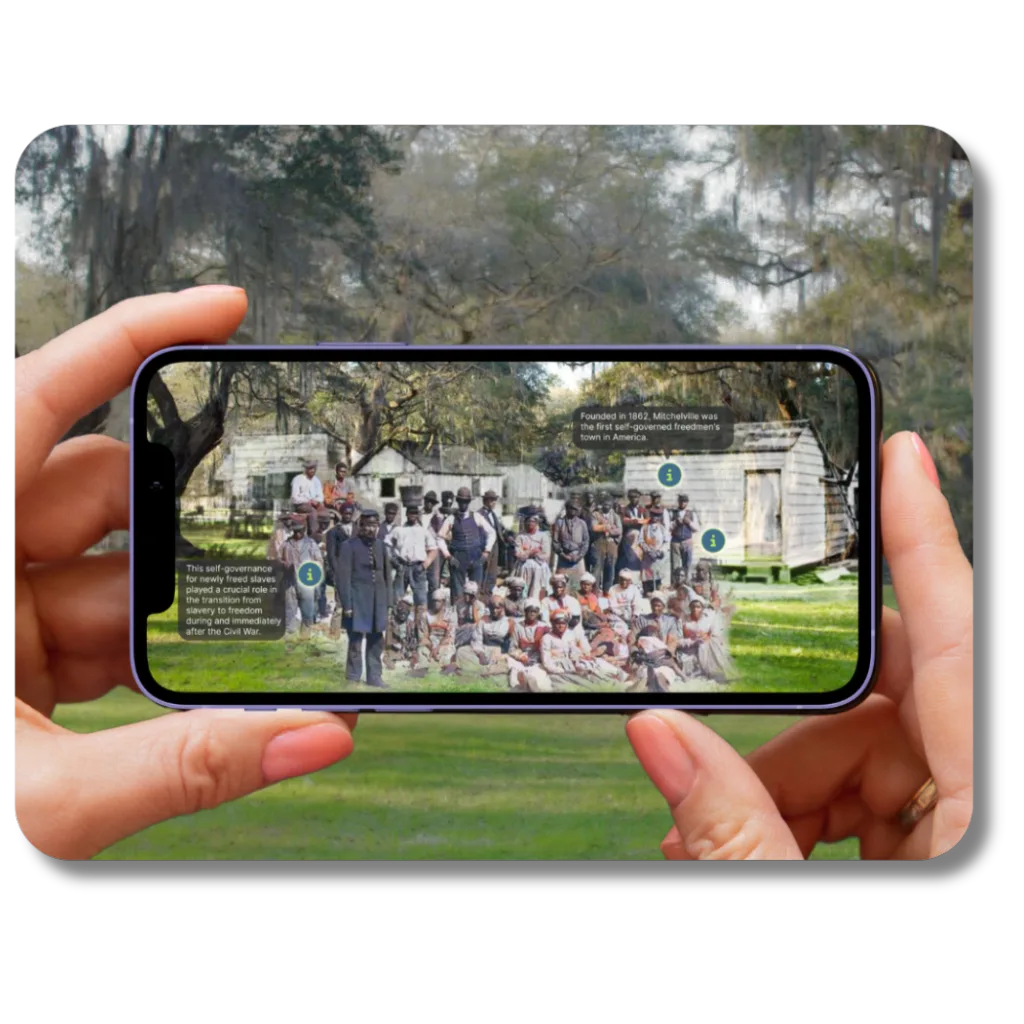
Guru works across distributed grounds and degraded connectivity, with location-aware content that triggers where it matters and augmented reality for showing what used to stand there.
Engagement here is measured in participation.
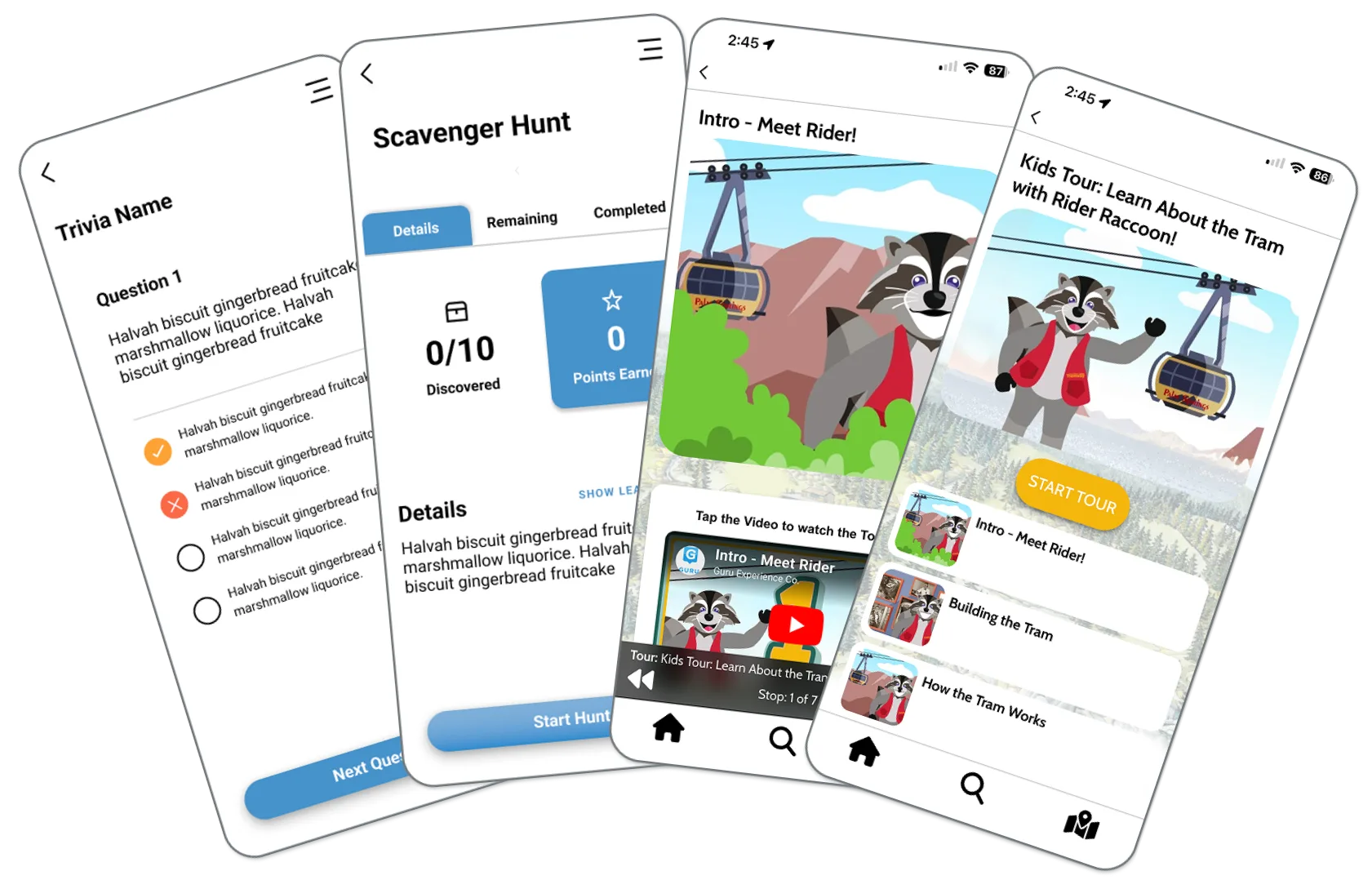
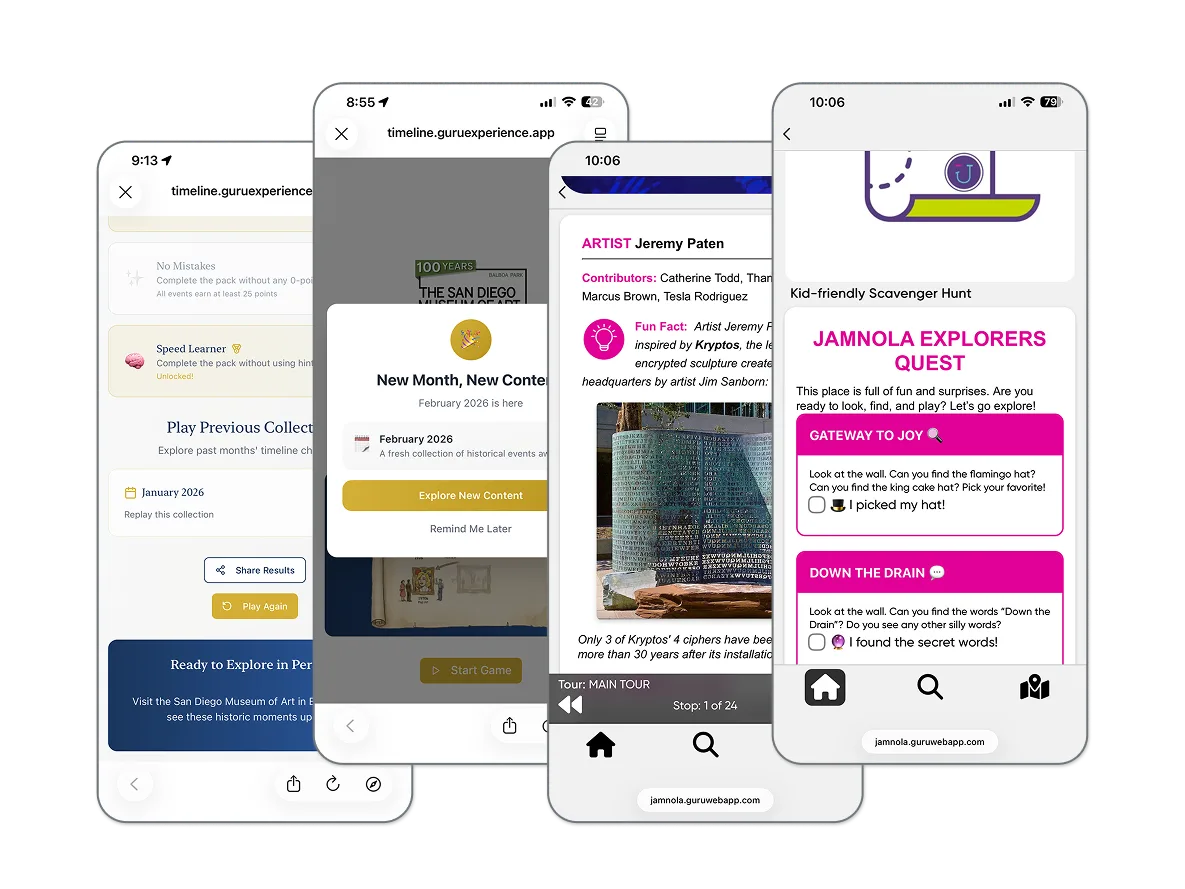
Guru supports interactive play as a first-class format: challenges, hunts, and puzzles that give families a reason to cover the whole floor, plus age-targeted content so a ten-year-old and an adult can get different things from the same exhibit.

If you are weighing Guru against Bloomberg Connects or another museum app platform, we wrote an honest side-by-side, including when the free option is the right call.