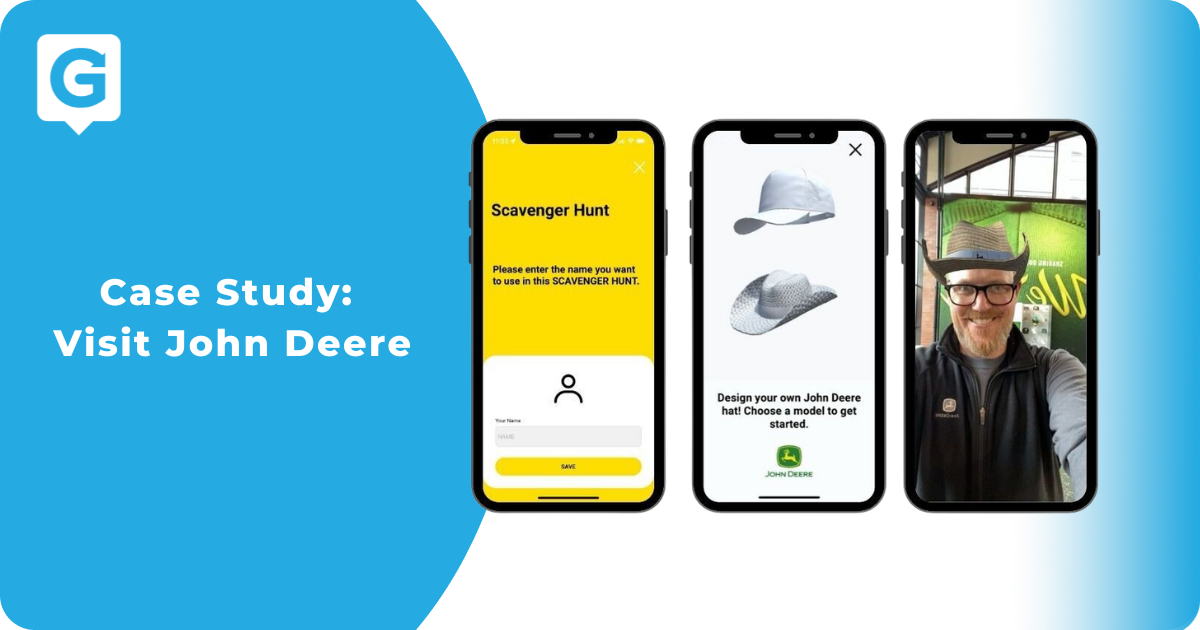
Case Study: John Deere
Introducing Visit John Deere - The App Experience!




Welcome to the first installment of our interview series with digital leaders in the museum and cultural institution world. It can't always be about us, right? Our hope with these conversations is to foster the sharing of ideas about tech in museums and the challenges to its successful implementation — and, with luck, to provide a spark of inspiration that leads to even more good projects.

To kick off the series, we were thrilled to talk with Nik Honeysett, CEO of the Balboa Park Online Collaborative and a member of the boards of the American Alliance of Museums, MCN, and — lucky us — Guru.
It was really a recognition of the proximity of all these museums. There was a recognition that they needed technology not only to start achieving their business goals but also, to engage audiences. In the mid-2000s, all the museums were recognizing these things and running to foundations and saying, "We need money for websites, collection digitization, those kinds of things." One foundation, in particular, recognized this as a problem and said, "This is crazy. You're all independently asking me for money for the same thing. So I'm going to stop making individual grants and I'm going to step back and set up an organization." (The BPOC) was originally a team of museum technologists with foundation money to make things happen who were there to be at the disposal of museums. The driving force was to build websites, hence our name, but one of the first things they did was to lay infrastructure--a high fiber bandwidth network--the kinds of technology on which digital stuff can happen. For example, the reason we have super fast free wifi across the park is that there was all this kind of investment in high fiber networking in the late 2000s. Now, you have a combo of volunteer-only museums and mid-sized museums who all have access to high-speed internet, for example.
Yeah and digital things like that are not going to happen without tech infrastructure. You want to do some cool, compelling things in your institution--particularly on a phone or a handheld or a mobile? If you don't have the bandwidth or the wifi, you won't be able to do it.
I think we need a better understanding of our visitors. I think that’s a key piece. First, If you think about mobile as a philosophy from a tech standpoint, you also have to think about a visitor first initiative. Museums are gradually coming to grips with that. Previously, it’s been the museum on its own--in its own kind of process of educating and creating the experience rather than really flipping the process on its head and asking: what do visitors really want from us? Tech is playing a part in helping us understand that. Because visitors, when you ask them, will tell you one thing. They always want to be nice to you and paint a rosy picture of what you’re doing. But the proof of the pudding is in what they actually do. And so, mobile apps, wayfinding, and tech can absolutely tell you--unequivocally tell you what they’re doing rather than what they think they’re doing.
To find out how we get from what museums can learn from shopping malls to Google's Alexa, read the rest of the conversation.
Nik's point about the gap between what visitors say and what they actually do is one we take to heart: understanding real visitor behavior is why engagement analytics are part of every app we build. See how our CMS and analytics work together.
Behind the scenes of how we turn museum stories into interactive, accessible experiences - plus what we’re learning along the way