Museum Wayfinding Is Harder Than a Map
Why indoor navigation breaks in buildings, and what it actually takes to make a museum map a visitor can trust.


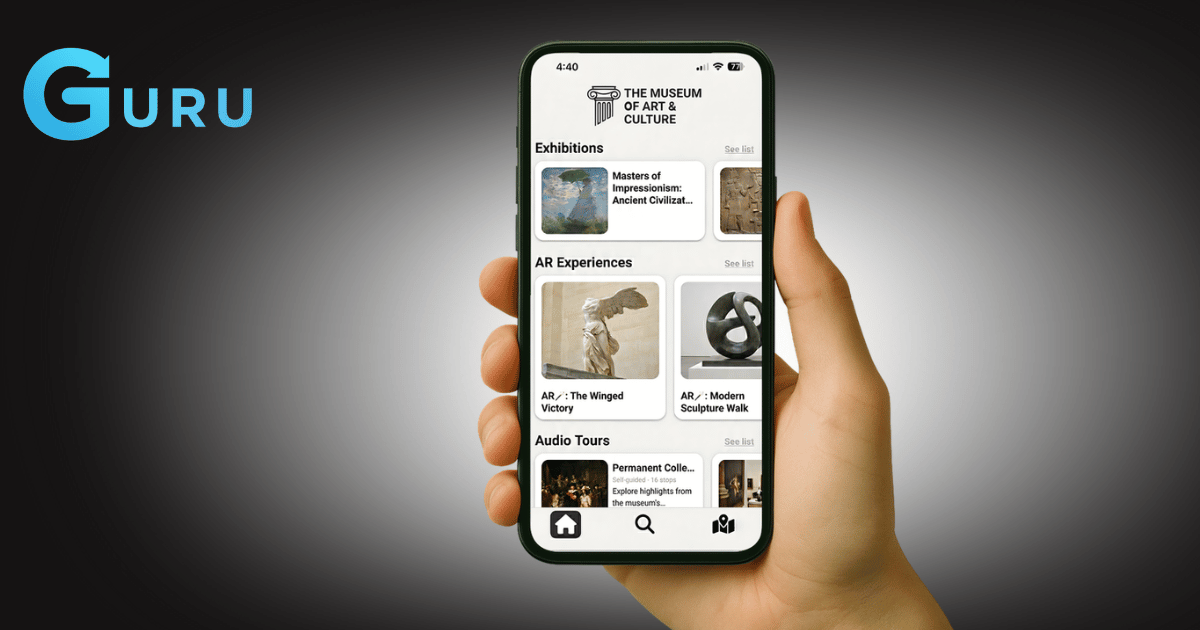


Mobile guides for museums and cultural sites have been around for over a decade. But just because you build one, does not mean visitors will use it.
So how is it that we can achieve such high download rates?
One of the most common measures of success for digital programs is the Capture rate (usage rate, download rate, or take-up rate are also used in the Industry). How many of the visitors are actually using the resource your team spent time, energy, and budget on? If it is minimal then the natural assumption is that it is not a good product, or does not suit visitors' needs.
Often, this assumption is true. But more often than not, this assumption is only a small piece of the puzzle that explains why visitors may or may not use a digital resource.
In terms of apps, we have many tried and true methods for achieving high download rates including: gaining visitor service buy-in, marketing the app as synonymous with the overall experience, and creating practical functions that make onsite app use integral to the experience.
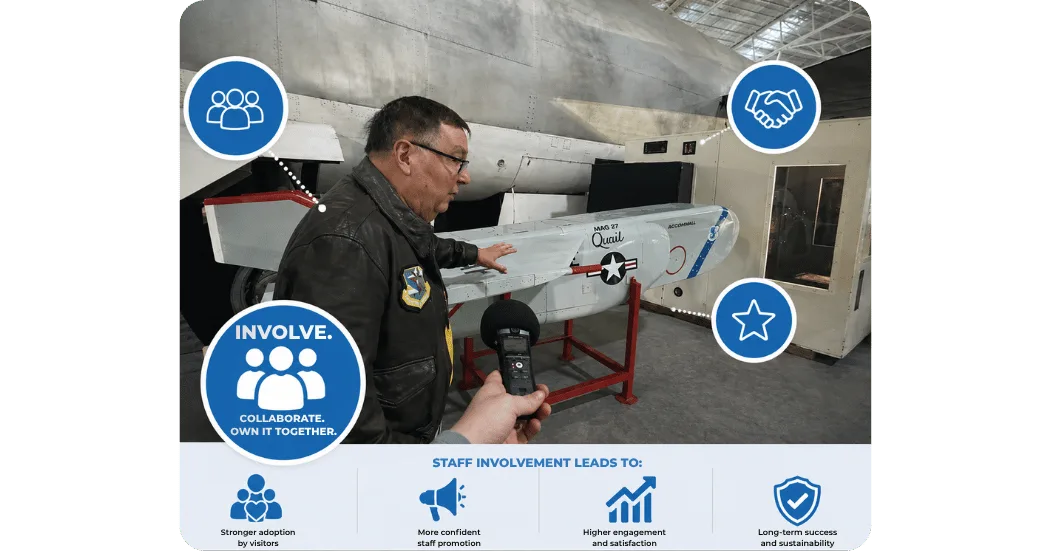
If visitors don't know about your app, how do you expect them to download it? There are many barriers to entry with an app, but we have proven that those are easily overcome with the help of your visitor services staff. When your frontline staff knows, likes, and understands the app, they can confidently impact visitors' behavior in downloading it. They must be able to troubleshoot potential issues with visitors and provide guidance on the best way to use the app. Not to mention that promoting app download as part of their welcome script is key. Signage is of the utmost importance, but with so many visitors laser focused on just getting through the line to get their ticket—a verbal cue to download the app is absolutely necessary.
Our partners at Battleship USS Iowa have paired their visitor service efforts with fantastic marketing to get download rates above 30% on their strongest days. They do this with an enthusiastic and informed visitor services, docent, and volunteer team.
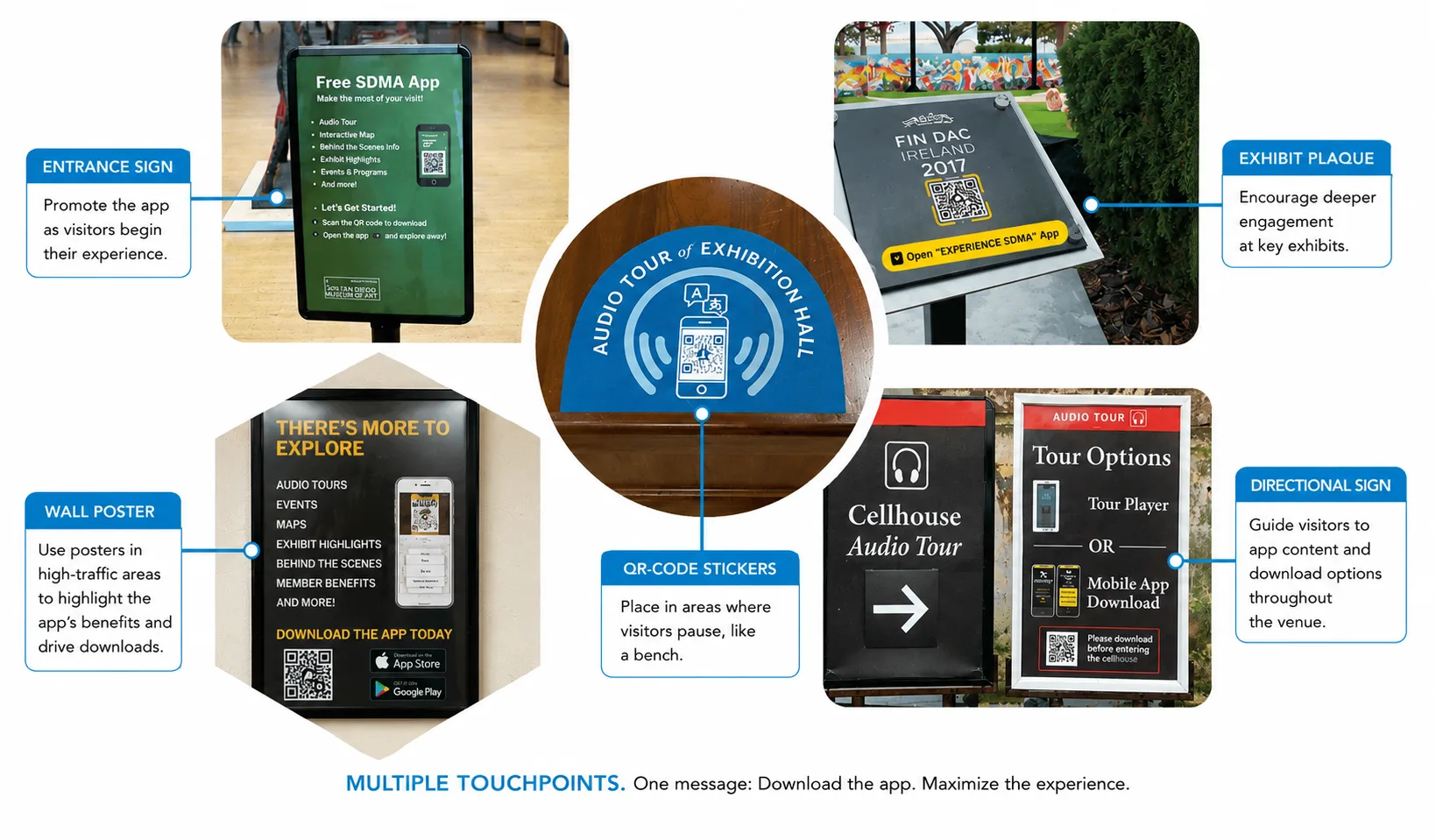
Marketing is also key for communicating the importance of the app to the visitor experience. From the aforementioned ever-presence of signage to your digital presence, advertising for your app should be everywhere. Why not be loud and proud about the experience you created for visitors? Why put so much time and energy into a project like an app and not shout from the rooftops that it's live, available, and integral to the visitor experience?
The most successful audio tours and museum apps have been synonymous with the museum itself. When you create a sense of FOMO (something I've written about repeatedly) visitors WILL behave how you hope they will. Some of you might remember SFMOMA's success rates with their app at reopening back in 2016, with their relentless marketing and incentivized push to download the app and skip the line. They got the marketing right, and had visitors actually downloading the app at rates above the industry standard at the time.
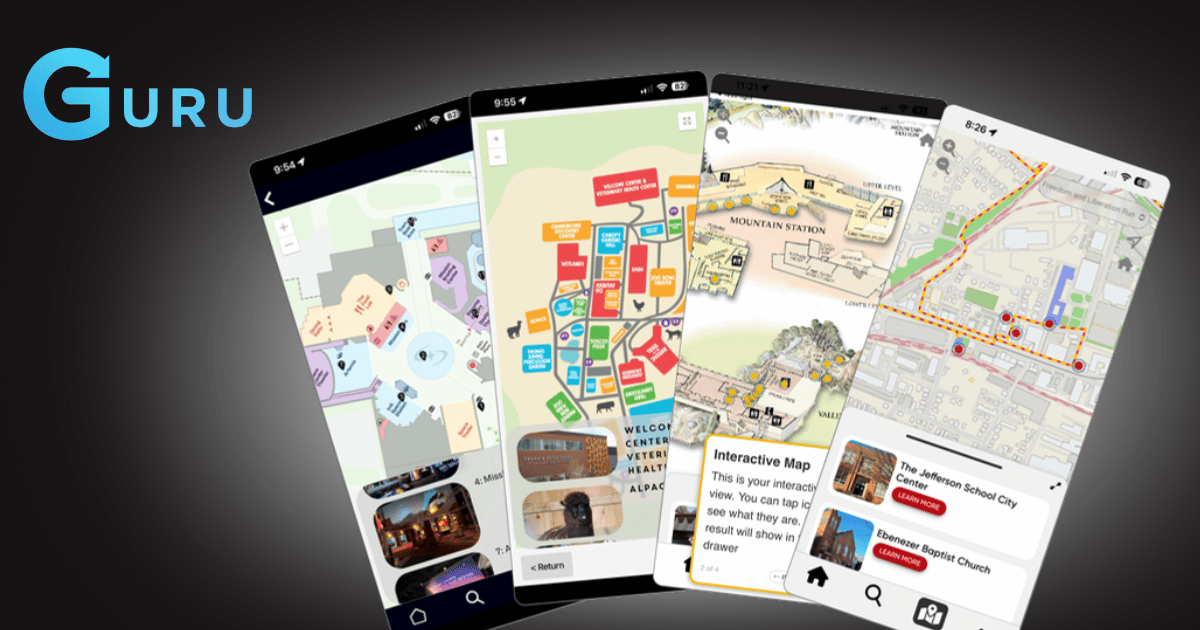
Finally and most importantly, museum apps must not just be fun, but also practical. A map is a great start, but what we really mean is tied to the other two strategies discussed above.
Practical apps include functions that make the overall visit better, easier, more seamless, and more impactful. For example, a virtual queue that is mandatory for being able to experience something. Disney implemented it for their most in-demand attractions, and without downloading the app and joining the virtual queue, your chances of getting to experience their newest attractions are slim to none.
We too have implemented a virtual queue to help keep people from standing around waiting in close proximity. Given the pandemic, visitors do not want to be shoulder-to-shoulder in line indoors anymore (as if they ever did!). The take-up rate surpassed anything previously seen by our partner from any of their past chosen vendors once this function went live. All of a sudden, visitors understood that the app was an integrated piece of their entire museum experience. They had to download it.
Overcomplicating a process and experience is not the goal of an app. Nor is having one simply for the sake of "having an app." An app is only as successful as its usefulness, marketing, and promotion. Every museum has amazing stories to tell, and getting those stories in front of their audiences should not be rocket science. Just ask our partners!
Want to see what this could look like at your institution?
Explore more ideas and examples on the Guru Experience website, follow us on LinkedIn, or get in touch with our team to talk about what might make sense for your visitor experience.
Behind the scenes of how we turn museum stories into interactive, accessible experiences - plus what we’re learning along the way