A Partnership Approach That Puts Your Museum's Needs First
Too Good To Be True?




Do you struggle with achieving high download rates for your app? Or perhaps you’ve heard from peers that visitors don’t download apps, so you’ve never deployed one? Maybe your department did try in the past, but didn’t have the support of your larger museum team? Whatever the case, you are not alone.
Achieving high download rates is challenging, but there are a few key necessities to launching and maintaining a successful museum app — and they all come down to getting it consistently into the hands of visitors.
Read more about museum apps in the 21st century
Most museums struggle to get their mobile guides into the hands of visitors. So how do some of our partners reach take-up rates above 30%? What’s their secret to a high rate of use (Capture Rate)? It all starts with the visitor services staff. It’s easy to put the blame on the visitor: “Visitors won’t download an app!” Instead, it’s more useful to look at your museum’s front-line operations, and how your mobile guide integrates with your visitor experience as a whole.
It is worth being precise about what a high rate actually looks like, because the spread is wide. Across seven years in which we logged downloads and recorded admissions side by side — 1,164,811 downloads against 11,229,263 admissions — our portfolio ran at 10.4%. The median institution-year was 5.3% and the strongest reached 32.7%. A good result is several times the sector norm, not a majority of your gate. For a closer look at how three of those institutions moved their own numbers, see what the pandemic really taught us about museum apps.
Taking a few tips from other sectors of the hospitality and retail industries can be extremely helpful when approaching a new strategy for encouraging mobile guide take-up. The barrier to promoting a mobile guide is often rooted in the institution’s mission-based approach, and not wanting to seem as if you are “selling” something to a visitor. But when that “something” is useful, furthers the institution’s mission, and improves the experience onsite, it is actually helping the visitor.
Who is the first person a visitor sees when they enter your institution? What does that person’s welcome script look like? Does it include an excited and encouraging message to use or download your mobile guide?
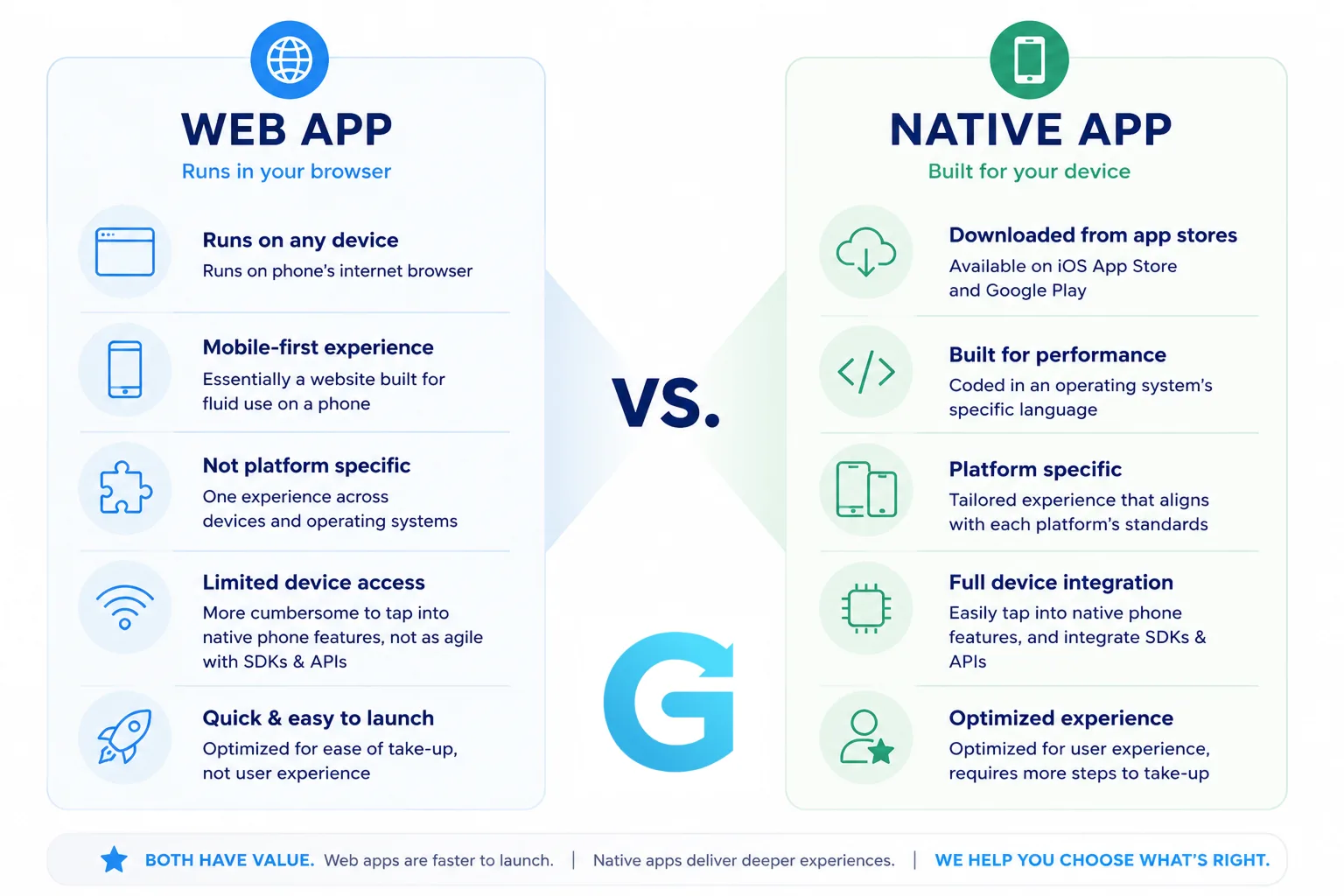
Check our infographic on the key differences between native and web apps. Some museums even opt for both.
All in all, a mobile guide is not a “build it and they will come” sort of endeavor. It takes the buy-in of each department to share in both the promotion and success of your mobile guide. Just like a new exhibition or event takes time and energy to build awareness and encourage participation, so does your mobile guide. After all, it is a useful tool for storytelling, wayfinding, donating, discovering, and connecting with your visitors through every step of their experiential journey.
Behind the scenes of how we turn museum stories into interactive, accessible experiences - plus what we’re learning along the way