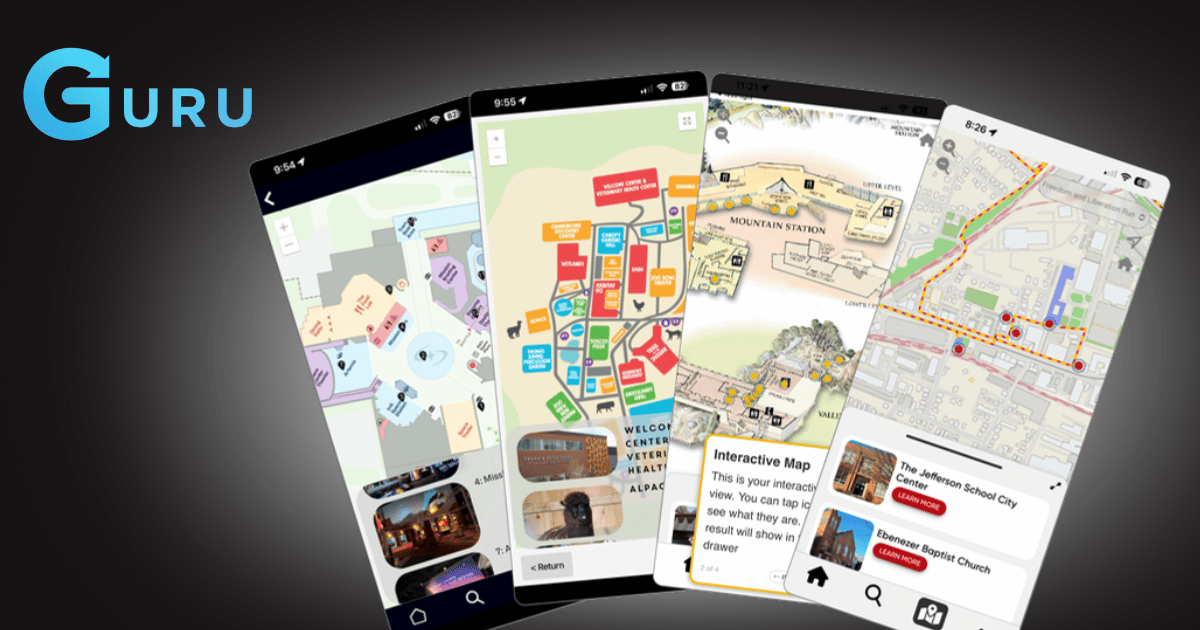
Museum Wayfinding Is Harder Than a Map
Why indoor navigation breaks in buildings, and what it actually takes to make a museum map a visitor can trust.




So you’ve heard about augmented reality, but can’t quite picture what Pokémon Go has to do with your zoo or aquarium? Fair enough. In our experience, AR can enhance learning, create connections between visitors and animals, and even increase revenue through donations and sales. But first, let’s start with the basics.
If you’re new to AR, here’s the quick version. Basic AR involves a trigger. Picture a sign, a t-shirt, or a poster at your zoo or aquarium: visitors point their mobile device at the trigger, and an AR experience is overlaid onto the real world. That experience can be a 3D model of an animal or person, or it can simply be video or audio. The other form of AR works a lot like Pokémon Go — an experience or object appears depending on your location. Taken together, there are many ways AR can be used as a tool to enhance the visitor experience and help your institution meet its goals. Here are a few ideas we keep coming back to.
Augmented reality can give zoo visitors a way to experience wildlife beyond what is possible in a traditional exhibit. In this demo, Guru uses AR to place a realistic 3D rattlesnake directly into the visitor’s environment, creating an opportunity to explore the animal up close while adding interpretation, storytelling, and educational context.
For zoos and wildlife institutions, experiences like this can help visitors better understand animal behavior, adaptations, habitats, and conservation stories—while creating memorable moments that extend learning beyond the enclosure.
Watch Guru’s augmented reality rattlesnake experience in action.
To see a 3D zookeeper talk about giraffes on your iPhone, download the Living Desert Zoo and Gardens app here, press the AR button, and point your phone at the giraffe image above.
When a 3D object springs out of the ground where nothing was before, many of us can’t help feeling like we’re in Star Wars, and Princess Leia is sending us an urgent message. Zoos and aquariums can use 3D objects in AR to bring animals — extinct or otherwise — to life. Keepers and naturalists can share their knowledge with visitors at times they can’t be physically present. You can even let animals talk and tell their own stories. (Some of you won’t be into that, but kids might be!)
3D objects can spring from a mat on the ground or an interpretive sign. They can even pop out of t-shirts, posters, or business cards. To see a zookeeper from our partner, the Living Desert Zoo and Gardens, come to life on your iPhone, download the app here, press the AR button, and point your phone at the giraffe image above. Make sure to have your volume on so you can hear what she has to say.
People of all ages enjoy treasure hunts. Imagine a zoo or aquarium where the signs at an exhibit pose a question, and visitors point their phones at the sign to see the answer in augmented reality. AR reveals work best when you use them for questions where a visual would help understanding.
For instance, giraffes are one of the most popular animals at the Living Desert Zoo and Gardens. We created a trigger that asked “How big is a giraffe’s heart?” When visitors point their phones at the trigger, 3D models of an anatomical heart and a basketball the same size pop up. Interacting with the question and seeing the answer appear in 3D increases the impact of the answer. In a fun twist, we put the same trigger on a sticker that then asks “How big is your heart?” and connects to the donation page of a giraffe conservation group. Check out the video below to see a demo, or read the original full post.
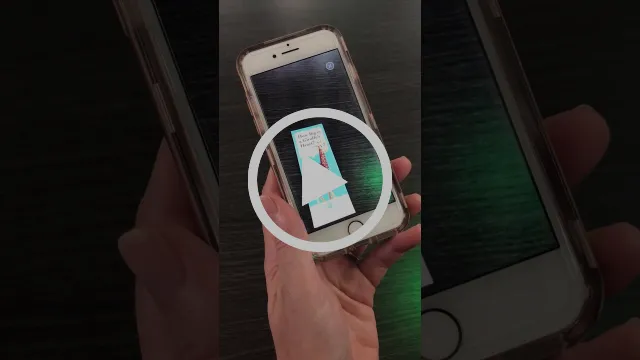
Watch to see a demo of our AR giraffe conservation sticker!
This post first appeared during MCN 2017, one of our favorite events of the year. We shared our new AR and VR experiences at Booth 1 in the Exhibit Hall, and at 4pm on the day this ran, Guru CEO Paul Burke and Nik Honeysett, CEO of the Balboa Park Online Collaborative, presented Virtual Futures: When VR is the Cost of Doing Business.
Curious how AR can deepen learning rather than distract from it? Read our series on AR and education, or learn more about Guru.
Behind the scenes of how we turn museum stories into interactive, accessible experiences - plus what we’re learning along the way