What the Pandemic Really Taught Us About Museum Apps
At MCN 2021 we shared app data from three museums. Several years on, that data tells a more complete story about what really drives adoption.




What's so great about a moving painting with sound? Beyond the "wows" it brings, it's a way to make learning stick. Take the painting above: when visitors to San Diego Museum of Art point their smartphones at The Molo at the Basin of San Marco, it comes to life through augmented reality motion and soundscape. The augmented reality grabs attention first, then tells a story that drives a point home.
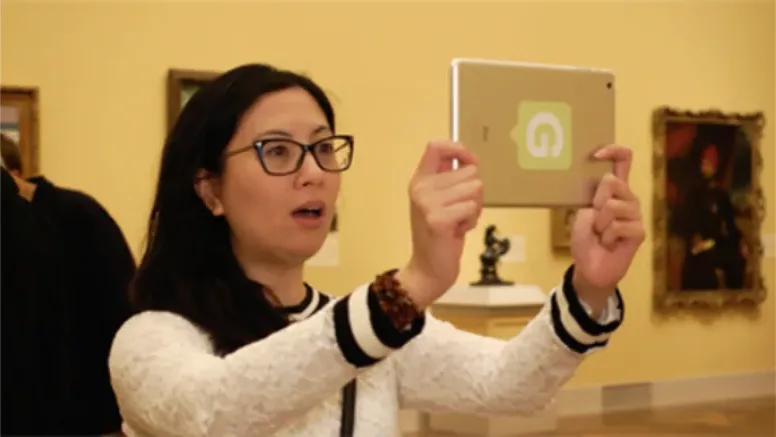
Seeing a thing is a different kind of understanding from reading about it. That is the whole case for augmented reality in a gallery: it does not replace the object or the label, it gives visitors a second way in.
Rather than glancing for a few seconds and moving on, viewers become active learners as they are transported into the scene. They discover that the artist, Bernardo Bellotto, was known for creating view paintings of Venice that tourists purchased to remember their trip. The painting was made to be a memento—a window back into Venice for travelers, and a peek at a far-off place for those waiting for them at home. By adding movement and sound, the painting is still performing its original intent, just for a twenty-first-century audience. Some visitors would remember those details from the wall card alone; the augmented reality layer makes them memorable for many more. That's the test we hold AR to: it should deepen the connection between visitor and object, not distract from it. And there's more than one way to do it. Here are a few ways augmented reality can enhance learning:

Sound and Motion Overlay
Imagine visitors not only reading about Monet’s study of light, but seeing what it means. With augmented reality, visitors can watch a work transform according to the time of day. Seeing it change under different lighting conditions helps solidify what they’ve learned—while adding a bit of magic.
Mixed Media
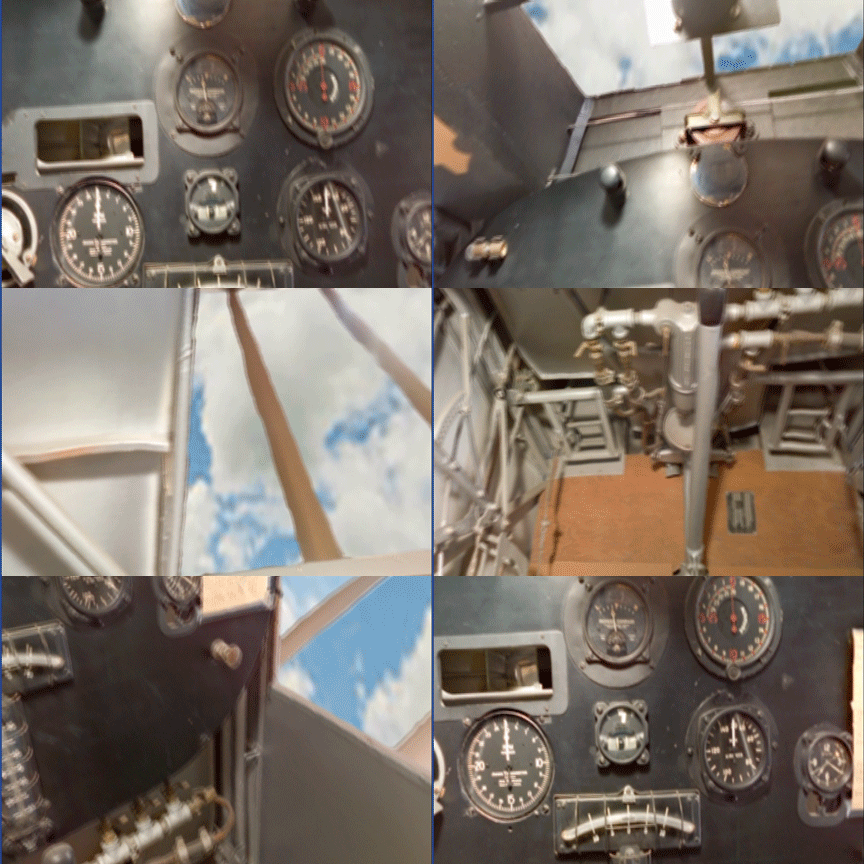
Suspended from the ceiling and high out of visitors’ natural field of vision, something like a replica plane might not get the attention it deserves. Augmented reality can change that using more than one technique. The Spirit of St. Louis augmented reality experience allows visitors to walk completely around a 3D model of the plane, start its engine, tap airplane parts to access fun and educational videos and even journey inside the cockpit of the original plane while learning about Lindbergh’s famous flight.
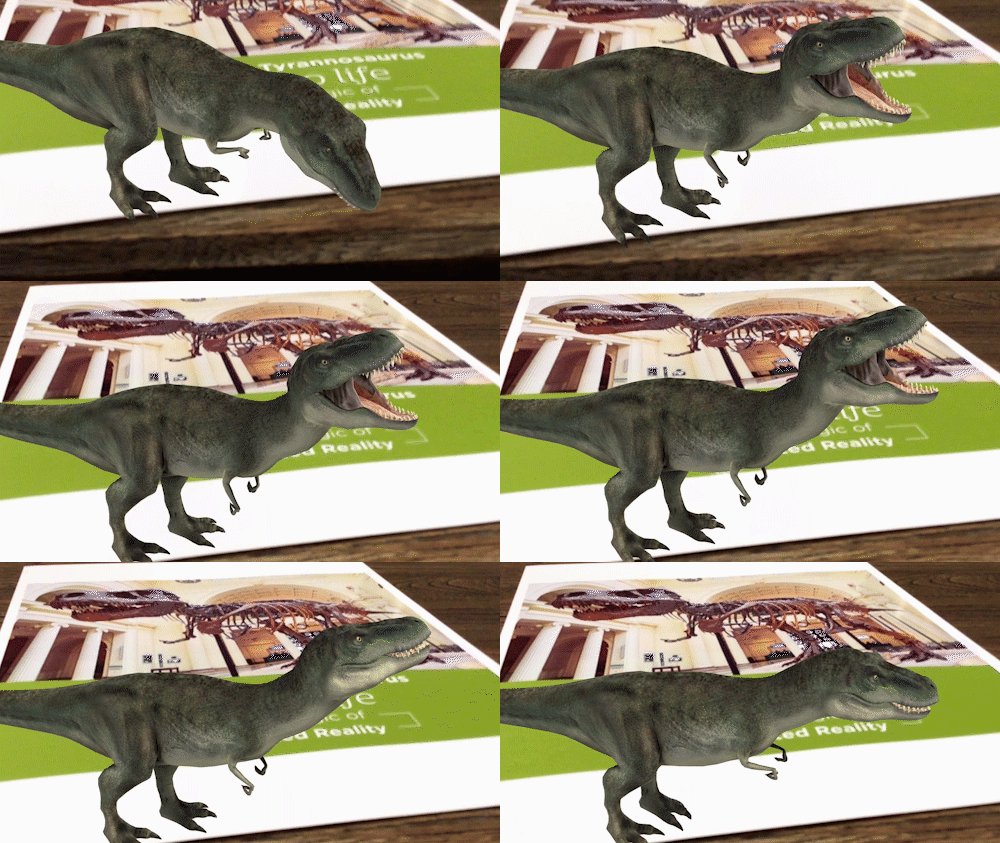
3D Animation in the Classroom
Augmented reality not only transports visitors as they learn—it can transport your institution into the classroom. By printing a trigger image, teachers can bring dinosaurs, artworks, historical figures, zoo animals, and even entire scenes from different time periods right into the classroom. Students explore and learn in 360 degrees while getting a taste of what your institution has to offer.
Learn more about augmented reality with Guru, or see how it fits into a fully branded visitor app.
Behind the scenes of how we turn museum stories into interactive, accessible experiences - plus what we’re learning along the way