
Digital Strategy Post Pandemic
How to Keep Digital-Savvy Visitors Engaged




Using Virtual Reality to engage visitors is not a new concept for Museums. Over the past few years, VR has become a useful access tool for many different groups including schools & students, tour groups, people with disabilities and everyday visitors while at home. Data shows us that experiencing something in VR creates a longer-lasting impact on the user than traditional means.
A 2016 study published by the University of Maryland showed the impacts of data recall when presented information in a virtual space, with 90.48% of facts recalled when experienced in VR versus only 78.5% recalled from a desktop display. For museums, this means that virtual experiences can in many ways better fulfill their missions, given the high effectiveness of the medium for learning.
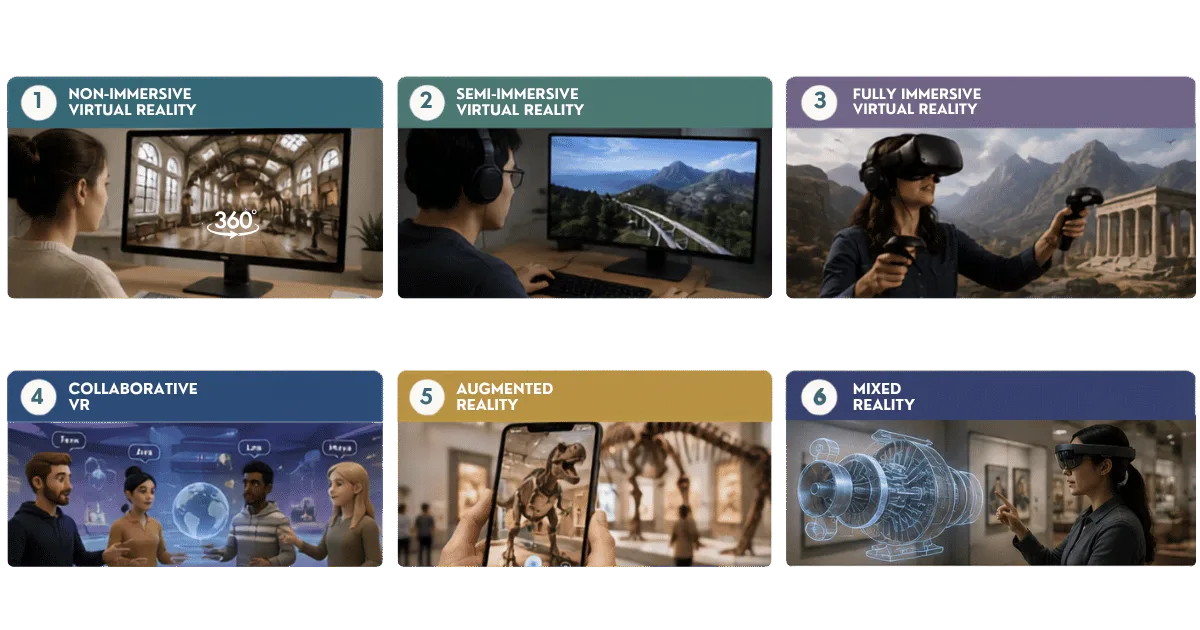
But what is the right kind of VR experience for your institution? That always depends on your goals, needs, and understanding of the various types. Below are the different types of virtual reality experiences, and how they might relate to your museum.
This video offers a quick look at how virtual reality can create immersive, memorable experiences that transport audiences beyond the physical space around them. For museums and cultural institutions, VR opens up new possibilities for interpretation, storytelling, and access—allowing visitors to step inside environments, moments, and perspectives that would otherwise be difficult or impossible to experience firsthand.
Watch the VR experience in action and see how immersive technology can expand the visitor journey.
A widely known non-immersive VR example includes Google Arts and Culture Expeditions which enables users to take virtual trips to various destinations. These types of VR experiences can be used to help students better engage with the subject, such as virtual field trips to historical locations or learning-by-doing for applied sciences. Many museums have taken this type of experience one step further by creating fully immersive VR experiences. These types of VR tour experiences have also had overwhelmingly positive impacts.
According to a 2018 study by Yeonhee Cho, AR positively impacts spatial presence, and increases learners' enjoyment and active participation when educated with a full-immersion VR tool.
We highly recommend checking out some examples of VR for museums to get some inspiration for your own potential project. Check out this article from MuseumNext for a good place to start, or get in touch with us at the link below for a blue-sky brainstorm!
Get in touch with us!
Behind the scenes of how we turn museum stories into interactive, accessible experiences - plus what we’re learning along the way