Digital Strategy Post Pandemic
How to Keep Digital-Savvy Visitors Engaged




Digital storytelling projects often begin with a format: an audio tour, an app, an augmented reality moment, or a new interactive. We think that starts the conversation in the wrong place.
A digital storytelling strategy should begin with the visitor experience your institution wants to create. What should a visitor notice, understand, feel, or do? Which stories deserve more room than a label can give them? Where are visitors asking for context, choice, or help?
Only then should the technology enter the conversation.
This order matters because a museum story rarely belongs to one department. Curatorial teams protect its accuracy. Interpretation and education teams shape how people encounter it. Visitor services sees where the physical experience supports or contradicts it. Marketing invites people in. Accessibility work determines who can participate. Digital teams keep the experience working. Leadership decides what the institution can sustain.
If the strategy belongs to only one of those teams, the finished experience will show it.
“We need an app” is not a visitor need. Neither is “we should do AR.” Those may become useful choices, but they do not tell a team what it is trying to accomplish.
A stronger starting point sounds more like this:
These are specific enough to guide decisions and broad enough for several departments to recognize their role.
We recommend writing the visitor need in one sentence and testing it with the people who hear from visitors every day. Does the front desk recognize it? Do educators see it on the floor? Does it appear in visitor comments or search behavior? Is this the problem visitors have, or simply the project we are most ready to fund?
That last question can save a team months of work.
.webp)
Institution-wide support does not mean every department gets every feature it requests. It means each team can see how the strategy connects to its work and understands the decisions behind it.
Bring the relevant teams together early and ask each one to answer the same three questions:
The third question is the one teams often skip. A curator may be the right person to approve interpretation but not the person who can make weekly updates. Visitor services may know exactly where visitors get confused but lack time to manage content. Marketing may be ready to promote the experience but need a clear reason for visitors to open it.
Surfacing those realities is not a sign that the project lacks support. It is how the team builds a strategy that can survive contact with the calendar.
A shared strategy does not ask every department to do the same work. It makes ownership visible before the work begins.
Museum teams rarely suffer from a lack of material. The harder problem is deciding what belongs in the visitor journey.
A story spine gives the team a common editorial test. It might be a question visitors carry through the galleries, a point of view that links several objects, or a sequence that reveals how a place changed over time. It should be simple enough to repeat in one sentence and sturdy enough to support different kinds of content.
From there, the team can create layers:
Layering respects the fact that visitors bring different interests, needs, time limits, and ways of learning. It also keeps digital interpretation from becoming a second wall label on a smaller screen.
Technology should deepen the connection between a visitor and the story. If it draws attention to itself instead, we have made the tool the subject.
Once the visitor need and story spine are clear, format decisions become easier.
Audio can bring in testimony, emotion, pronunciation, atmosphere, and voices that do not fit comfortably on a label. Augmented reality can reveal a lost layer, show change over time, or make scale visible. A map can support discovery as well as direction. A game can give families a shared purpose. A simple text and image story may be exactly right when the visitor needs quiet context rather than another interaction.
Not every story needs all of these. A strong strategy gives the team permission to use less.
It also considers where the story belongs. Some content helps a visitor plan before arrival. Some makes sense only in front of an object or within a landscape. Some deserves a life after the visit. Treating those moments as one continuous experience helps teams avoid cramming everything into the on-site journey.
This is also where ownership matters. If the digital experience represents your institution’s voice, visual identity, and relationship with visitors, it should feel like your institution. A fully branded experience gives the team room to shape that journey around its own audiences rather than fitting the story into a shared directory.
Launch day receives a great deal of attention. Month eighteen tells us more about whether the strategy worked.
Exhibitions rotate. Scholarship changes. Staff members leave. Visitor questions reveal gaps. Audio needs a correction. A route changes. A seasonal program becomes the new priority. The storytelling strategy needs a clear way to absorb those changes without beginning again.
Before production starts, decide:
A CMS that non-technical staff can return to after weeks away matters here. So does a service relationship that continues once the experience is live. The goal is not constant content production. It is a manageable rhythm that keeps the experience accurate, useful, and connected to the institution’s current work.
Good analytics can tell a team whether visitors opened a tour, played an audio stop, selected a language, returned to a section, or left a journey early. That evidence can replace guesses with better questions.
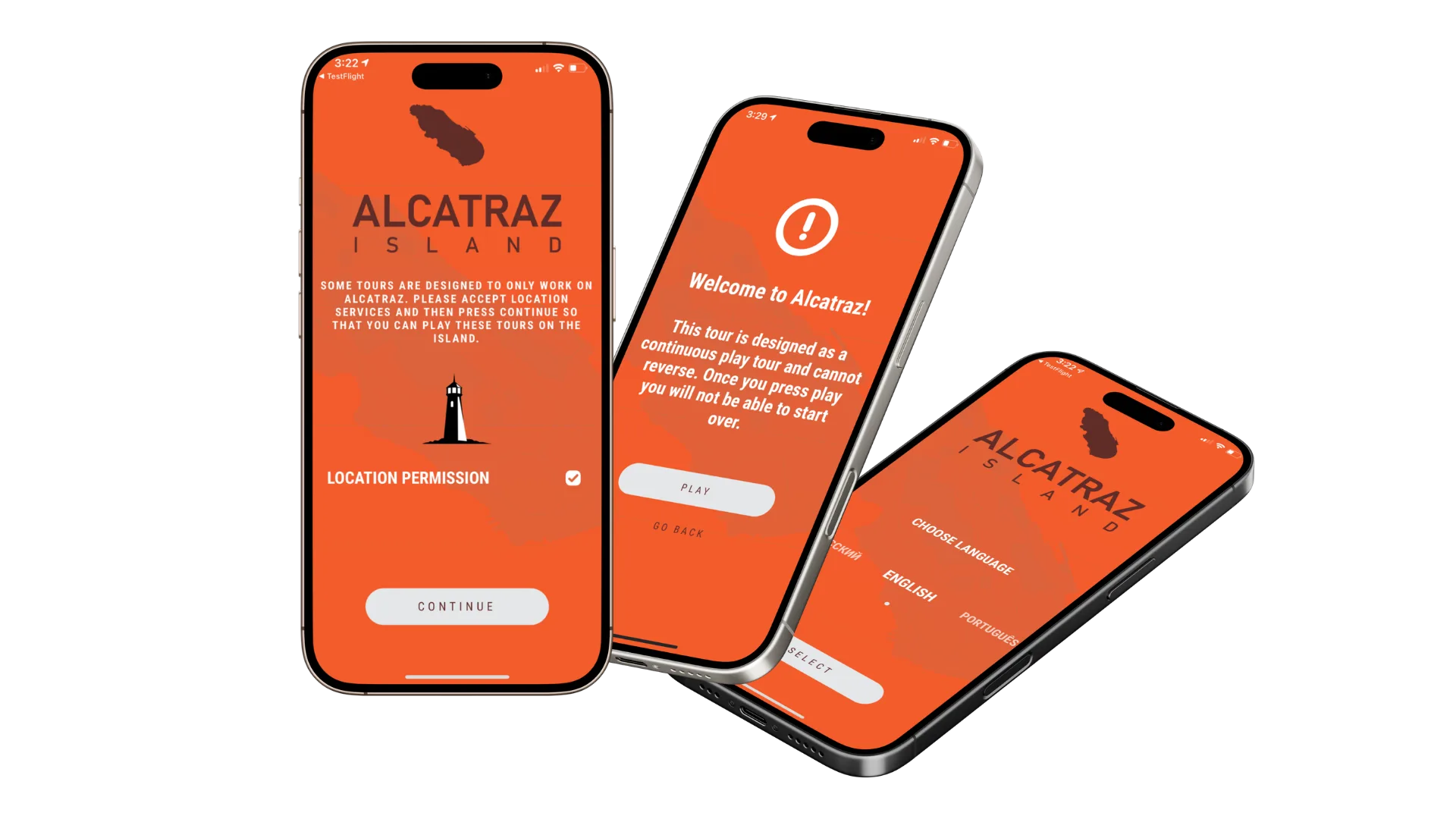
Alcatraz is a landmark example of audio storytelling in a historic place. Its Cellhouse Audio Tour uses the voices of formerly incarcerated men and correctional officers to bring the prison’s history into the space where it happened. In 2022, the app we built to support that visitor experience recorded 75.6 thousand users generating 1.54 million tour-audio plays, an average of 20.58 plays per audio user. That shows substantial use of the interpretive experience. It does not, by itself, prove what a visitor learned or felt.
That distinction is important. Behavioral data shows what happened in the experience. Visitor conversations, short surveys, observation, accessibility feedback, and educator insight help explain why it happened and what it meant.
We get the clearest picture when those forms of evidence work together. A low-use stop may have a weak title, poor placement, an audio problem, or simply a story that matters less to visitors than the team expected. The number identifies where to look. People help the team understand what to change.
A digital storytelling strategy can be institution-wide without launching everywhere at once.
Choose one journey with a clear audience, a meaningful story, and a team that can stay involved. Define what success would look like before production. Watch how visitors use it. Listen to staff who support it on the floor. Make a small round of improvements, then decide what should carry into the next experience.
This approach creates something more useful than a one-time pilot. It creates a shared working method.
As the strategy grows, the team will already have answers to the questions that usually slow a second project down: how content gets approved, which formats fit which moments, what the technology needs to do, who maintains it, and which evidence guides the next decision.
The strongest digital storytelling strategies are not technology plans with interpretation added later. They are visitor-experience plans that give technology a clear job.
They help curators protect meaning, educators create useful layers, visitor services reduce friction, marketing make an honest invitation, digital teams maintain a coherent system, and leadership understand what the institution is building and why.
When those pieces align, the technology can do what we believe it should do: help people find their way into a story, then leave room for the human connection at the center of it.
If your team is considering how a shared storytelling strategy might become a visitor-facing experience, our overview of museum solutions is a practical next read.
Curious what a Guru-powered app could look like for your institution? Book a demo with our team, or read more insights from the Guru team.
Behind the scenes of how we turn museum stories into interactive, accessible experiences - plus what we’re learning along the way