Summer of AR
Four outstanding examples of cultural institutions putting augmented reality to work.




If you were at LA Fleet Week this year, you may have noticed something unusual about the lines for the popular ship tours: there weren’t really lines at all. We partnered with Battleship IOWA and LA Fleet Week to build a new virtual queuing system, which made its debut at the annual event.
Anyone who has waited for a ship tour knows the old routine — a long queue, shuffling feet, a lot of sun, and the nagging question of whether you’d ever make it aboard. LA Fleet Week is about celebrating the nation’s service members and enjoying a community event, not spending half the day in a snaking queue.
As the Daily Breeze reported, "Day 1 of LA Fleet Week welcomes hundreds to celebrate the nation's service members" — and part of that welcome was that visitors weren’t stuck standing in place.
These are exactly the kinds of challenges our museum solutions are built to solve: pairing a visitor experience goal with practical, manageable technology.
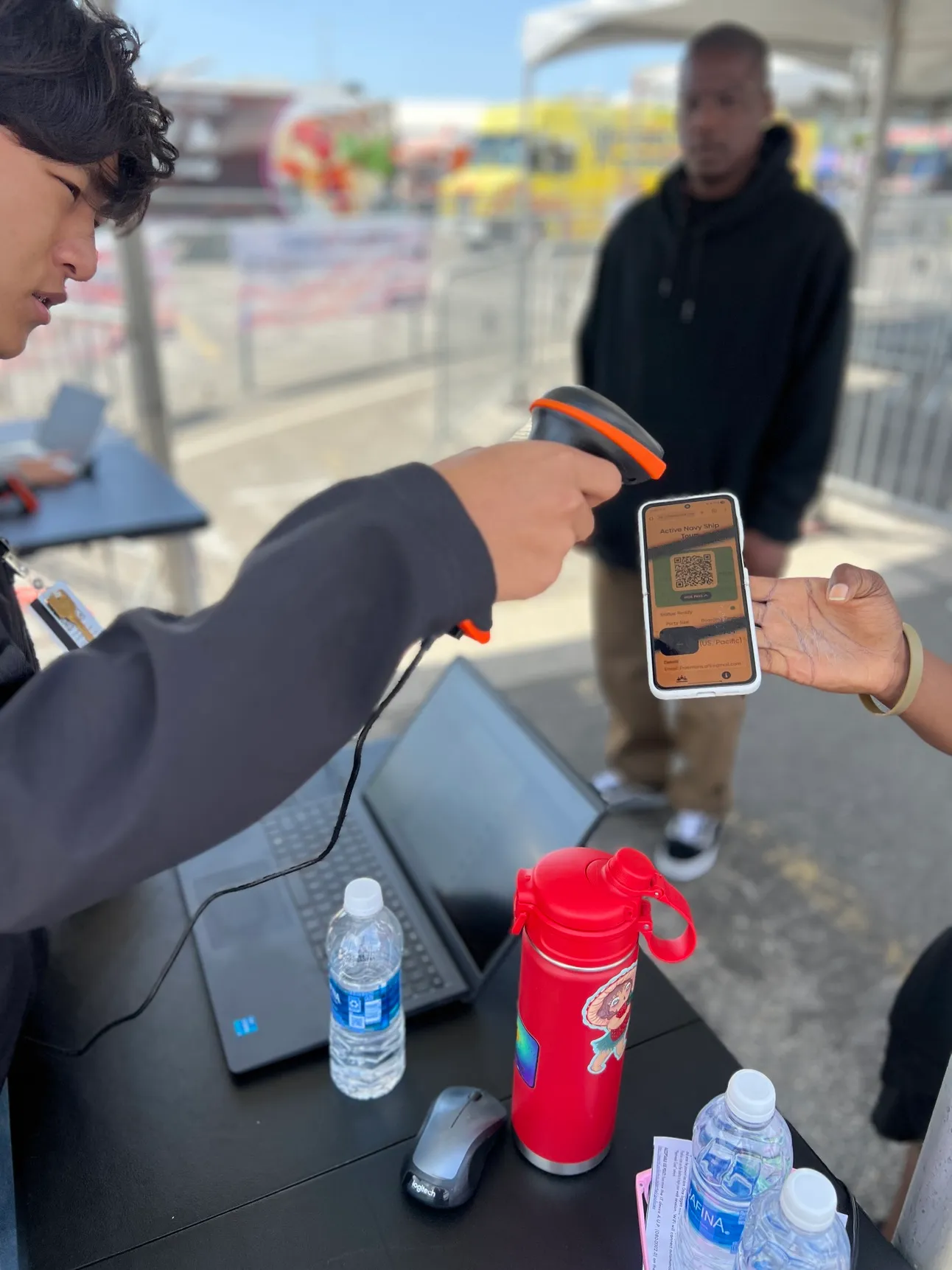
Before virtual queuing, large events like LA Fleet Week faced a familiar challenge: huge crowds and long waits for the most popular attractions. That meant frustration for attendees, and hours spent standing in line instead of grabbing a bite, exploring other displays, or simply soaking in the atmosphere.
Our virtual queuing system replaces the physical line with a digital one, giving attendees their time back. Here’s what that looked like on the ground.
See more of what we build for museums and events.
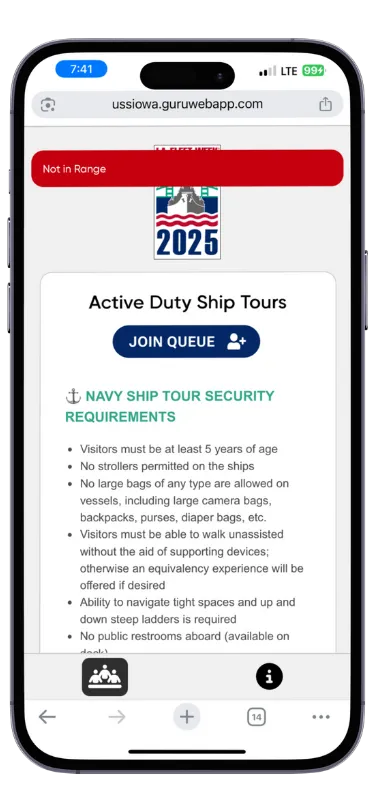
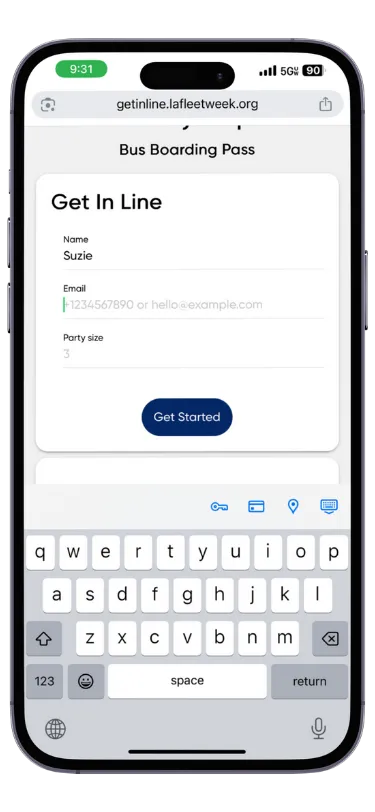
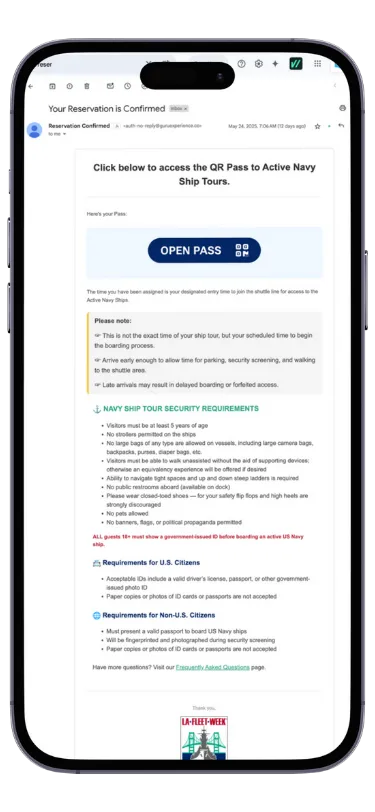
Reserve a spot digitally: Instead of joining a physical line, visitors reserved their whole party’s place in the digital queue from their phones. For this event, geo-fencing ensured visitors were within 4 miles of the event site in order to book a place in the queue.
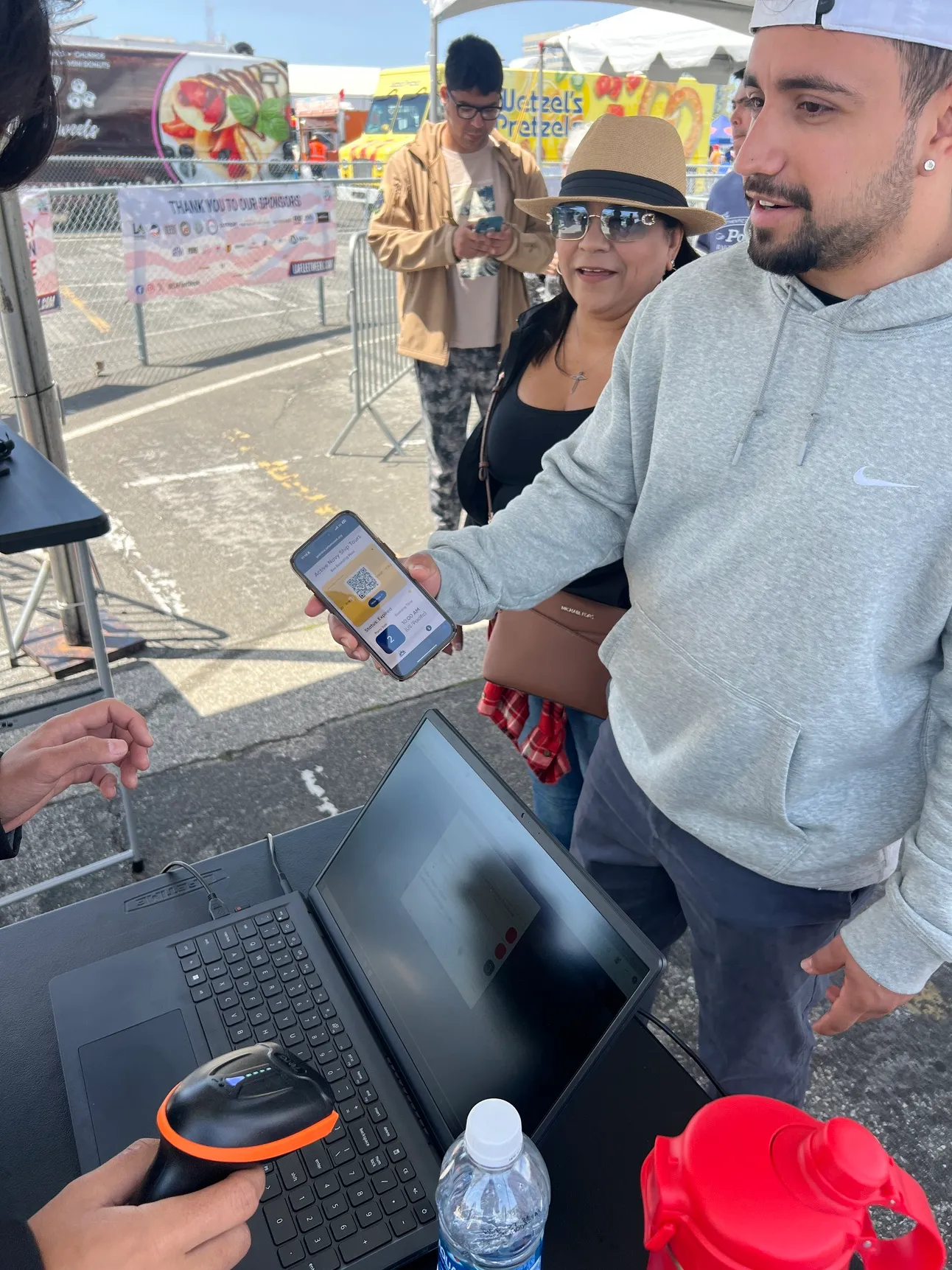
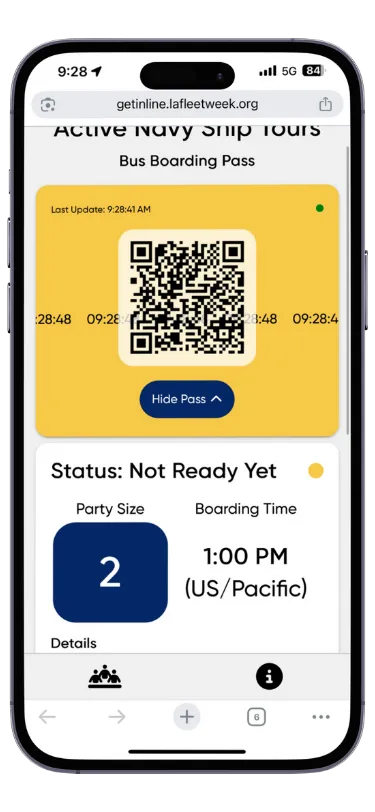
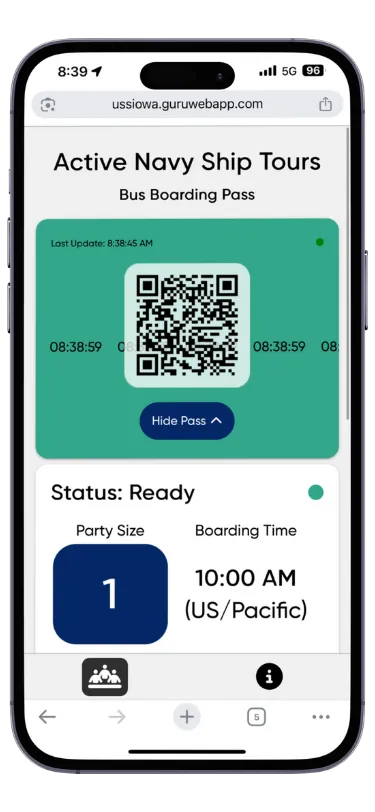
Receive a barcode: Once a spot was reserved, the system generated a unique digital barcode — the visitor’s ticket to their place in the virtual line.
Explore freely: With their spot secured, attendees were free to roam the entire event — visiting food vendors, checking out other displays, or relaxing — without the stress of missing their turn.
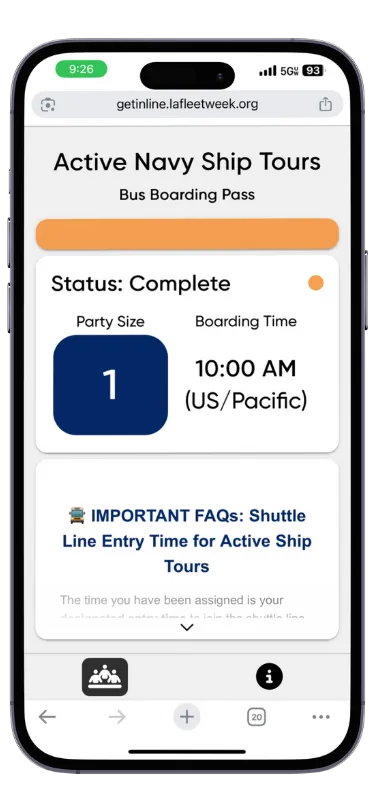
Get a return time: The system managed the flow of visitors and assigned each party a return time. Visitors could check their screen to see how close they were getting; when their boarding time arrived, the barcode turned green to let them know it was time to head back.
Scan and enter: At the entry point, visitors presented their barcode to be scanned by staff and walked aboard — no long physical line required.
This isn’t just about convenience. Whether it’s a large-scale event like LA Fleet Week, a special museum exhibition, or a free admission day, we believe the experience should be about engaging, learning, and celebrating — not waiting. And for organizers, a virtual queue makes the day’s operational flow far easier to manage.
If you have a queue in need of an upgrade, we’re happy to chat — reach us at solutions@guruexperience.co.
Behind the scenes of how we turn museum stories into interactive, accessible experiences - plus what we’re learning along the way